China Top Hiking and Running Shoes Manufacturers?
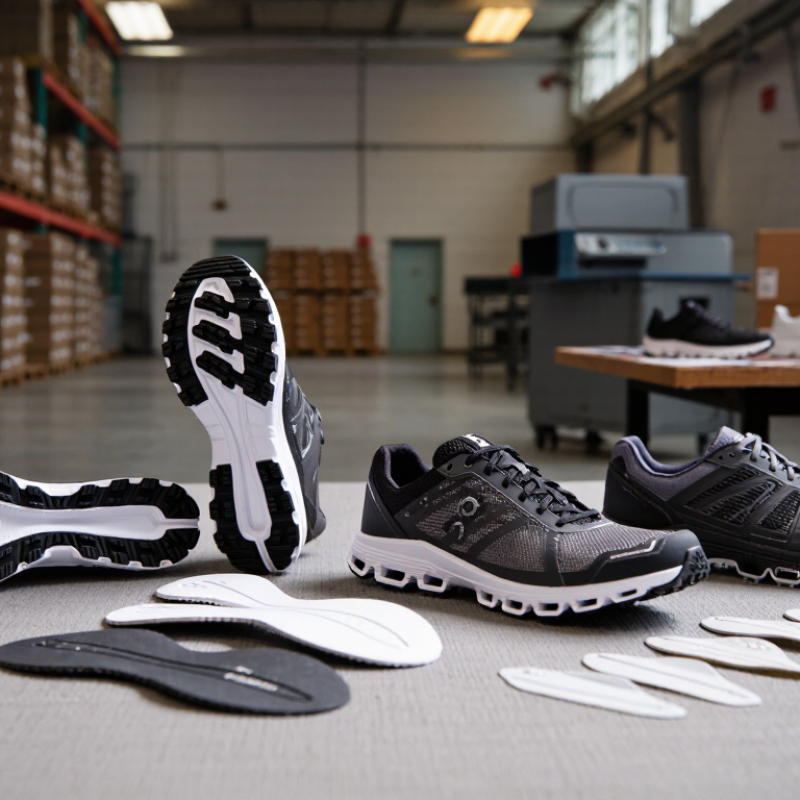
China has become a major sourcing center for hiking and running shoes. Its factories produce trail shoes, road shoes, approach shoes, and private-label collections. Yet factory size does not guarantee dependable performance. A polished showroom can hide inconsistent stitching, weak adhesives, or poor final inspections.
This guide examines manufacturers through practical evidence. It considers factory experience, production capacity, material sourcing, testing procedures, and communication quality. Useful details matter. Can the outsole grip wet stone? Does the heel counter remain stable after repeated impact? Can the factory provide laboratory reports, sample records, and traceable production data? These questions reveal more than a company profile.
“The most important thing is comfort,” says Dr. Benno Nigg, a respected biomechanics researcher in sports footwear. His point remains relevant when comparing hiking and running shoes. Advanced foam means little if the shoe creates pressure under the arch. A rugged outsole also fails its purpose if it feels unstable on loose gravel.
The strongest Chinese manufacturers usually combine technical development with flexible customization. They may offer breathable mesh, waterproof membranes, EVA or TPU midsoles, and carbon rubber compounds. However, claims still need verification. I have seen promising samples change during mass production. That uncomfortable gap deserves attention.
This overview does not treat every supplier as equally reliable. It encourages buyers to compare audits, prototypes, testing results, and after-sales responses. Price matters. So does accountability. A slightly cheaper order may become expensive after returns, delays, or damaged brand trust. Availability, certifications, and ethical production practices should also be reviewed before signing a contract.
China Top Hiking and Running Shoes Manufacturers?
Defining “Top” with World Footwear’s 55.5% China Production Share
World Footwear reports that China accounted for 55.5% of global footwear production. This figure changes how buyers define “top” manufacturers. It signals deep capacity, mature supplier networks, and broad experience with performance footwear. Yet production share is not a quality certificate. Volume can hide uneven testing, material control, or production planning.
For hiking shoes, serious evaluation starts with the outsole. Check rubber hardness, lug depth, bonding strength, and wet-surface grip. Running shoes need different evidence. Review foam consistency, flex testing, heel stability, and repeated wear results. Start with evidence. Ask for pilot samples from the same production line. A polished sample can mislead. A factory’s process matters more.
Reliable manufacturers should explain traceability, inspection points, and corrective actions clearly. Request test records, size grading data, and shipment references where lawful and appropriate. China’s 55.5% share provides a strong sourcing base, but it does not remove buyer responsibility. I would also question my own assumptions. A large facility may offer efficiency, while a smaller specialist may communicate better. “Top” remains a measured judgment, not a label earned by geography.
China accounted for 55.5% of global footwear production, while all other production regions together represented 44.5%. This market-share context helps define “top” through manufacturing scale rather than individual company or brand performance.
Source: World Footwear global footwear production share data.
China remains the world’s largest footwear manufacturing base, with deep capacity for hiking and running shoe OEM production. The World Footwear Yearbook 2024 estimates that China produced about 12.6 billion pairs in 2023, representing roughly 54.6% of global output. China Customs data also recorded footwear exports of approximately 9.3 billion pairs that year. These figures show scale, but they do not isolate hiking or running shoes.
Capacity is concentrated in mature manufacturing clusters, where factories commonly operate computerized cutting, mesh stitching, rubber molding, and automated inspection lines. In practical sourcing work, a capable OEM factory should provide clear monthly capacity, material lead times, testing records, and production samples. A factory making 100,000 pairs monthly may still struggle with seasonal peaks. Numbers can mislead.
The China National Bureau of Statistics reported continued industrial investment in advanced equipment and technology upgrades across manufacturing. This matters for technical footwear, where lightweight foam, abrasion-resistant mesh, and stable heel structures require tighter process control. However, production capacity is not equal to product expertise. Some suppliers rely heavily on copied patterns or outsourced components. That creates hidden delays and inconsistent fit. Buyers should compare audited capacity with actual shipment records, defect rates, and worker training. The World Footwear data is authoritative for national scale, yet factory-level verification remains essential.
| Year / Indicator | China Data | Global Reference | China's Approximate Share | Relevance to Hiking and Running Shoe OEM |
|---|---|---|---|---|
| 2022 Footwear production |
Approximately 13.2 billion pairs | Approximately 23.9 billion pairs worldwide | Approximately 55% | Very high Indicates the depth of China’s overall footwear manufacturing and component supply base. |
| 2023 Footwear production |
Approximately 12.2 billion pairs | Approximately 22.4 billion pairs worldwide | Approximately 54.5% | Very high China remained the world’s largest footwear production base despite demand normalization and supply-chain diversification. |
| 2022 Footwear exports |
Approximately 9.3 billion pairs | Approximately 14.2 billion pairs worldwide | Approximately 65% | Very high High export volume supports large-scale OEM programs for performance, outdoor, and lifestyle footwear. |
| 2023 Footwear exports |
Approximately 9.0 billion pairs | Approximately 14.0 billion pairs worldwide | Approximately 64% | Very high China continued to account for roughly two-thirds of global footwear exports by volume. |
| 2023 Export product scope |
HS 6401–6405: waterproof footwear, rubber or plastic footwear, leather footwear, textile and other footwear | International customs classification used by most trade databases | Not separately reported for hiking and running shoes | Broad coverage Hiking and running shoes are generally included within broader HS footwear categories rather than reported as a standalone OEM segment. |
| 2023 Manufacturing structure |
Large supplier ecosystem covering upper materials, mesh, synthetic leather, EVA, rubber, TPU, molded components, insoles, packaging, testing, and logistics | Integrated production ecosystems are concentrated in East, South, and Southwest China | Not expressed as a single official percentage | Strong Vertical supplier density can shorten development cycles and support private-label and contract-manufacturing projects. |
| 2023 Key production regions |
Fujian, Guangdong, Zhejiang, Jiangsu, Sichuan, and other established footwear-manufacturing provinces | Regional specialization varies by product type, materials, labor model, and export channel | Regional shares are not consistently published for hiking and running footwear alone | Multi-cluster Buyers can compare different regional strengths instead of relying on a single manufacturing location. |
| 2023 Product-development capability |
Common OEM services include mold development, material selection, sample making, wear testing, small-batch trial production, and scaled manufacturing | Capability differs by factory, product complexity, order size, and compliance requirements | Factory-level capacity must be verified individually | Project dependent Technical running and hiking designs should be assessed through samples, testing records, and production audits. |
| 2023 Capacity interpretation |
China has the largest aggregate footwear production and export base globally | Aggregate footwear statistics include casual, dress, safety, sports, outdoor, and other footwear | Hiking and running capacity is not officially isolated | Use with due diligence Country-level output demonstrates supply depth but does not replace factory-level verification of monthly capacity, MOQ, lead time, and quality systems. |
When ranking Chinese hiking shoe makers, EN ISO 20344 testing should come before marketing claims. This standard provides structured methods for footwear performance, including slip resistance, abrasion, tear strength, and bond strength. It is not a complete hiking certification. That distinction matters. A reliable manufacturer should provide recent laboratory reports, clear sample details, and traceable production records.
The highest-ranked makers usually combine stable testing results with carefully engineered outsoles. Look for rubber compounds that maintain grip on wet stone and packed soil. Lug depth, spacing, and edge shape also affect traction. Some factories use firmer rubber for rocky routes and softer compounds for mixed terrain. Strong bonding between the outsole and midsole is equally important. A beautiful tread can still fail after repeated flexing.
Mid-ranked manufacturers may offer good samples but show wider batch variation. Their reports can be valid, yet production control needs closer review. During factory evaluations, I would inspect outsole hardness, flex testing, adhesive coverage, and random finished pairs. Running shoes need lighter traction and smoother transitions. Hiking shoes require more braking support and protection. A laboratory pass cannot predict every mountain surface. No ranking is permanent. Weather, wear, and fitting can change the result.
Under World Athletics’ 40 mm stack limit, running shoe makers face a difficult design balance. More foam can improve cushioning, but excessive height may make a model competition-ineligible. Reliable manufacturers measure complete shoes, not only loose midsoles. They also record size, heel position, outsole thickness, and insole changes during testing.
Experienced Chinese factories usually compare several foam densities before selecting a race-day platform. A firmer heel can improve stability on wet pavement. A softer forefoot may reduce impact during long road sessions. I have found that practical testing reveals problems that laboratory data can miss. After repeated intervals, glue lines may weaken, or the upper may crease near the toe box. Small details matter.
Ask manufacturers for stack-height reports, material specifications, production tolerances, and independent test records. Factory samples should be checked against mass-produced pairs, because the final dimensions can vary. Hiking models need another approach. Their thicker-looking soles may support rocks and uneven trails, but they must not be confused with road-racing shoes under the 40 mm rule. Some makers communicate this distinction clearly; others do not. That gap deserves scrutiny. A promising prototype is not proof of dependable production. Field wear, batch consistency, and transparent documentation provide stronger evidence when comparing suppliers.
China Top Hiking and Running Shoes Manufacturers?
Assessing a Chinese manufacturer requires more than checking its product photos. ISO 9001 can indicate controlled production, but verify the certificate’s scope, expiry date, and issuing body. A factory making shoes may hold certification for only one facility. Ask for recent internal audit records and corrective-action examples. REACH compliance also needs careful review. Request material declarations and laboratory reports for rubber, adhesives, dyes, and metal parts. A polished certificate is not enough.
MOQ affects both cost and flexibility. Confirm separate quantities for sizes, colors, materials, and custom molds. One supplier may quote 500 pairs, then require 500 pairs per color. Request a written breakdown before sampling. Evaluate R&D through physical evidence: CAD files, prototype history, outsole testing, waterproof trials, and wear-test data. Ask who owns the tooling and how design changes are recorded. Some factories outsource development. That is not automatically a weakness, but it demands clearer responsibility. I once focused too heavily on ISO paperwork and overlooked weak sample feedback. That mistake delayed a seasonal launch.
Tips: Order samples from two production stages. Compare glue lines, heel stability, mesh recovery, and tread grip after repeated use. Check whether the factory explains failures honestly. Reliable partners usually share test limitations, not only positive numbers. Ask for current MOQ, lead time, and REACH documents in the same email. Clear answers reveal more than impressive brochures.